

Are you self-employed and wondering how to qualify for a mortgage? You’re not alone.
Getting approved for a home loan when you run your own business can feel tricky, but it doesn’t have to be. The key is knowing exactly what lenders look for and how to prepare your financial documents to show steady income.
If you’ve been hesitant because of confusing requirements or fear of rejection, this guide is for you. Keep reading to discover clear, practical steps that can help you secure a mortgage and move confidently toward owning your dream home.
Mortgage Basics For Self-employed
Self-employed borrowers must meet specific eligibility criteria to qualify for a mortgage. Lenders usually require proof of income from the last two years. This proof often includes tax returns, profit and loss statements, and business licenses. Consistent income is key for approval.
Some common misconceptions confuse applicants. Many think being self-employed means automatic rejection. That is not true. Lenders look closely at income stability and documentation quality. Another myth is that tax write-offs hurt chances. While write-offs reduce taxable income, lenders assess net income carefully. Showing higher net income over time can help.

Income Verification
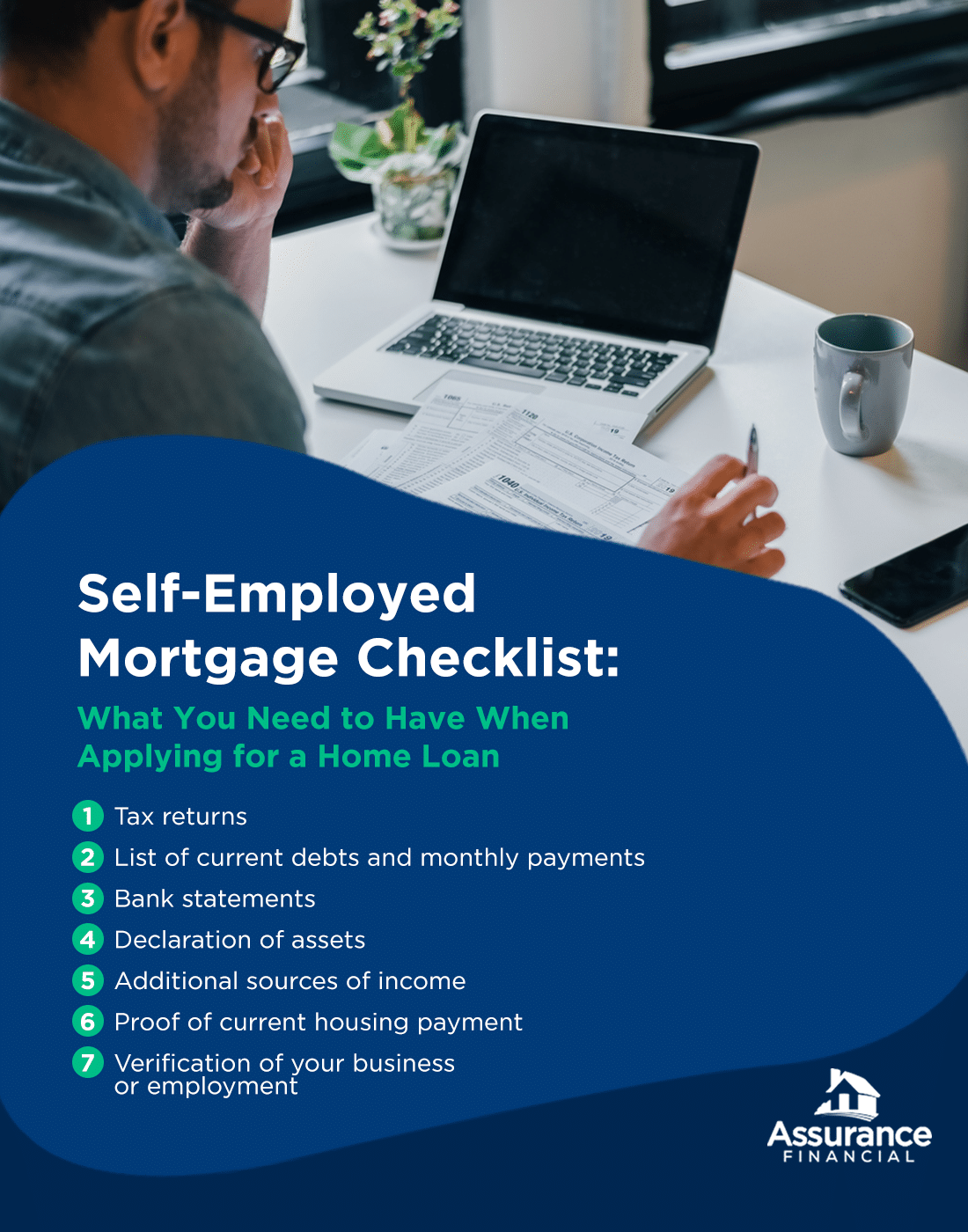
Tax returns are the primary proof of income for self-employed borrowers. Lenders usually require the last two years of personal and business tax returns. These documents help show consistent income and business stability.
Profit & Loss (P&L) statements give a snapshot of your business’s financial health. They list income and expenses over a period. Lenders use P&L statements to verify current earnings.
For business verification, provide licenses, permits, or registration documents. These prove the business is active and legal. Insurance papers or bank statements may also be required to support your application.
Credit And Financial Health
Credit score plays a key role in mortgage approval for self-employed borrowers. Lenders want to see a score of at least 620, but higher scores improve your chances. Paying bills on time and keeping credit card balances low helps maintain a good score.
The debt-to-income (DTI) ratio shows how much of your income goes to debt payments. Lenders usually prefer a DTI below 43%. To improve this ratio, reduce monthly debt or increase income. Tracking both credit and DTI helps build a strong financial profile for mortgage qualification.
Overcoming Common Challenges
Tax write-offs can reduce the income lenders see. Many self-employed borrowers claim many deductions. This lowers their reported taxable income. Lenders base mortgage approval on this net income. Showing steady or higher net income for 1-2 years helps approval chances. Some lenders offer Non-QM loans that use bank statements, not tax returns, to verify income. These loans suit those with many write-offs or complex taxes.
Income often changes month-to-month for self-employed people. Lenders want to see a stable income pattern. They usually review 2 years of tax returns and profit/loss statements. Keeping detailed records helps prove income consistency. Showing contracts or invoices can also help with qualification.
Loan Options For Self-employed
Traditional mortgages often require proof of income through tax returns and financial statements. Lenders typically ask for at least two years of consistent earnings to ensure stability. Self-employed borrowers must provide detailed documents like profit and loss statements, business licenses, and tax filings.
Non-QM loans or alternative loans do not rely heavily on tax returns. These loans consider bank statements to verify income, which helps those with complex finances or large write-offs. They offer more flexibility but may come with higher interest rates or stricter terms.
Both options require good credit scores and some form of income proof. Choosing between them depends on your financial situation, tax history, and how much documentation you can provide.
Preparation Tips Before Applying
Keep income records consistent and clear. Lenders want to see steady earnings over time. Save all invoices, bank statements, and tax returns. Show the same income on all documents. This helps prove your reliability.
Minimize deductions smartly. Large write-offs can lower your reported income. This might reduce how much you can borrow. Only claim necessary expenses. Talk with an accountant to plan deductions. This will keep your taxable income higher, improving your mortgage chances.
Working With Lenders
Lenders want to see steady income from self-employed borrowers. Usually, they require proof of income for at least two years. This includes tax returns, profit and loss statements, and bank statements.
Credit score matters a lot. A higher score can improve chances of approval. Lenders also check your debt-to-income ratio. Lower debt means better loan approval odds.
Business stability is key. Lenders prefer businesses with a history of consistent earnings. They may ask about the type of business and how long it has been running.
| What Lenders Check | Details |
|---|---|
| Income Verification | Tax returns, profit and loss statements, bank records |
| Credit Score | Usually 620 or higher is preferred |
| Debt-to-Income Ratio | Below 43% typically required |
| Business History | At least 2 years of stable income |

Local Considerations In Austin, Texas
The Austin, Texas housing market shows steady growth with rising home prices. Demand stays high due to a strong local economy and job growth. This can affect how lenders view mortgage risks for self-employed buyers.
Texas state rules impact mortgage approval processes. Lenders often require at least two years of income proof from self-employed applicants. Tax returns, profit and loss statements, and bank statements are key documents.
Texas does not have extra restrictions beyond federal rules, but local lenders may have specific requirements. Some lenders consider non-traditional income verification methods for self-employed borrowers in Austin.
| Aspect | Details |
|---|---|
| Market Trend | Increasing home prices, strong buyer demand |
| Income Verification | Two years tax returns, P&L statements, bank records |
| State Regulations | Standard federal rules apply, no extra Texas restrictions |
| Lender Preferences | Some allow alternative income proof for self-employed |
Expert Strategies To Boost Approval
Building a strong application is key for self-employed mortgage approval. Lenders want to see clear proof of income for at least two years. Providing tax returns, profit and loss statements, and business licenses helps show your income stability.
Organizing documents well makes the process smoother. Keep your financial records clean and avoid large unexplained deposits. Showing consistent income and steady business growth builds trust with lenders.
Seeking professional advice can improve your chances. Mortgage brokers and accountants understand lender requirements. They help prepare your paperwork and explain complex terms in simple ways. Experts can also suggest lenders who work well with self-employed borrowers.
Frequently Asked Questions
How Do Self-employed Qualify For A Mortgage?
Self-employed borrowers qualify by showing at least two years of income, tax returns, profit and loss statements, and business documents. Lenders assess consistent net income and may consider bank statements or alternative loans if taxes show low income.
What Is The 3 7 3 Rule In Mortgage?
The 3-7-3 rule means lenders verify income over 3 years, require 7 years of credit history, and expect a 3% down payment.
How Much Income To Qualify For A $500,000 Mortgage?
To qualify for a $500,000 mortgage, you generally need an annual income of about $100,000 to $125,000. Lenders require stable income and a good credit score. Self-employed borrowers must show two years of tax returns and consistent earnings. Loan terms and interest rates also affect qualification.
Is It Possible To Get A Mortgage Self-employed?
Yes, self-employed individuals can get a mortgage by proving at least two years of income and providing necessary documentation. Lenders require tax returns, profit and loss statements, and business records to verify income stability.
Conclusion
Qualifying for a mortgage as a self-employed person takes careful planning. Keep your financial documents organized and up to date. Showing steady income over two years helps build lender confidence. Be mindful of tax write-offs, as they can reduce your reported income.
Exploring alternative loan options like Non-QM loans may also help. Stay informed about lender requirements and prepare accordingly. With patience and proper preparation, owning a home is within reach for self-employed individuals.
Read More
- No Obligation Mortgage Quote: Get Fast, Free, and Easy Offers Today
- Best Mortgage Lender Quotes: Unlock Top Rates & Save Big Today
- Home Loan Quote Calculator: Instantly Compare Rates & Save Big
- Online Mortgage Quote Comparison: Unlock Best Rates Fast
- Instant Mortgage Rate Quote: Unlock Your Best Home Loan Today
- First Time Buyer Mortgage Broker: Expert Tips for Easy Approval
- Independent Mortgage Advisor Cost: What You Need to Know Today
- Mortgage Broker Fees UK: What You Need to Know Before Applying
- Online Mortgage Broker Comparison: Find the Best Rates Fast
- Home Loan Approval Requirements: Essential Tips for Fast Approval